Rhinoplasty (commonly referred to as a Nose job) is surgery that changes the shape of the nose. It can improve breathing, change appearance, or correct structural problems that are inherited or caused by injury. For most patients it is some combination of the three.
My adult practice is exclusively nasal surgery. That is all I do, and it shapes how I approach every case: the nose has to work as well as it looks, and the two are not separable. A nose that looks better but breathes worse is not a good result.
Cosmetic concerns. A dorsal hump, a wide or bulbous tip, a nose that is too large or too narrow for the face, asymmetry, or a nose that has changed shape after injury.
Breathing problems. A deviated septum, collapse of the nasal valve, or a nose that has never worked properly. Functional surgery of this kind is often claimable through Medicare where it meets the criteria, which is assessed at consultation.
Revision surgery. Patients who are unhappy with a previous operation, or whose breathing has been made worse by it. Revision work is more demanding than primary surgery, often requires cartilage grafts, and takes longer to settle. It is a significant part of what I do.
I use piezoelectric instruments for all my rhinoplasty. That is what “ultrasonic rhinoplasty” refers to.
The instrument vibrates at high frequency and cuts bone, but leaves the soft tissue, blood vessels and cartilage around it intact. Traditional instruments such as chisels, osteotomes and rasps cut whatever they meet. That matters because the nasal bones sit directly beneath the skin, wrapped in tissue that all contributes to how the nose looks and breathes afterwards.
I use it for two reasons, and both are about control rather than speed.
The first is precision in shaping. A rasp takes bone across whatever surface it touches. A piezoelectric tip removes bone exactly where it is placed, under direct vision rather than by feel. On the bridge of the nose where a fraction of a millimetre changes the profile, that difference is real.
The second is the osteotomies, the controlled cuts that let the nasal bones be repositioned. Made with an osteotome (chisel) these are often performed with limited visibility, and bone can fracture along a line other than the one intended. Made with a piezoelectric instrument, the cut goes where I put it. When you are narrowing a bony vault symmetrically, or straightening a nose that has been broken, that predictability matters a great deal.
What I notice most is how patients look in the first week or two. Less bruising, and less of the swelling around the eyes that people find most confronting.
The effect on early recovery is well supported. Multiple randomised trials, and several meta-analyses pooling them, show significantly less swelling and bruising in the first postoperative week compared with conventional technique, along with less pain and less damage to the lining of the nose. Operative time is not meaningfully different.
What the evidence does not show is that the nose looks better at twelve months. The final result depends on planning, on the cartilage work, and on how you heal. No instrument changes that.
It is also worth saying that ultrasonic instrumentation is a tool, not an operation. It is not the same thing as preservation rhinoplasty, which is a separate idea about which structures to keep rather than remove. I use both, but they are not interchangeable terms. And it does not touch the cartilage work, which for many patients is the larger part of the operation and the larger part of what determines the result.
Cosmetic surgery in Australia requires a referral from your GP, two consultations on separate days, and a seven day cooling off period before surgery.
At the first appointment I take a history, examine your nose inside and out, review your photographs, and we discuss what is realistically achievable. The second consultation is a full examination and planning session.
The consultation is an assessment, not a booking. I do not offer surgery to everyone who consults me. I will only proceed where I am confident that surgery can deliver a worthwhile and lasting improvement, and I will say so directly if I do not think that is the case.
Most patients take two weeks off work. The splint and sutures come out at about day seven.
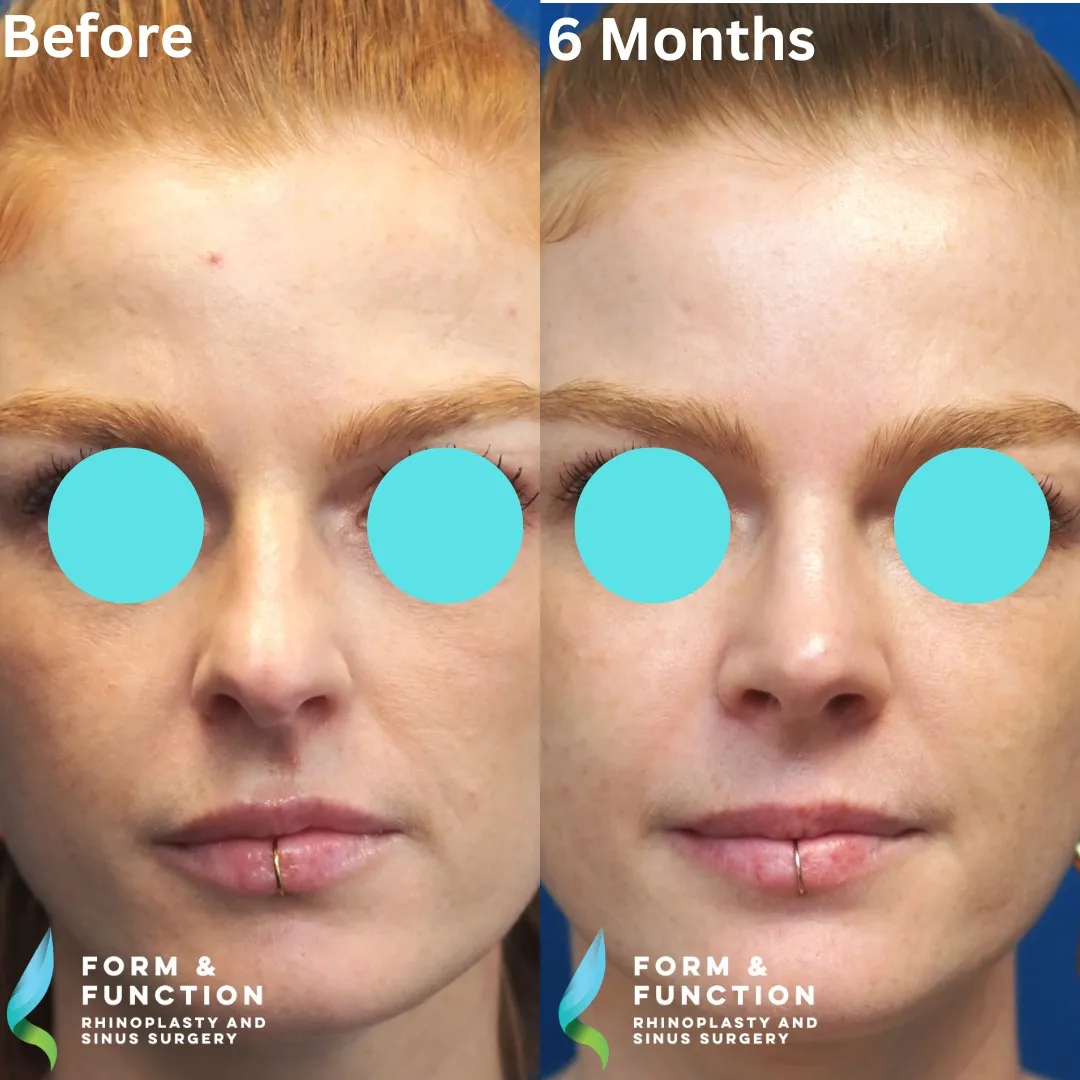
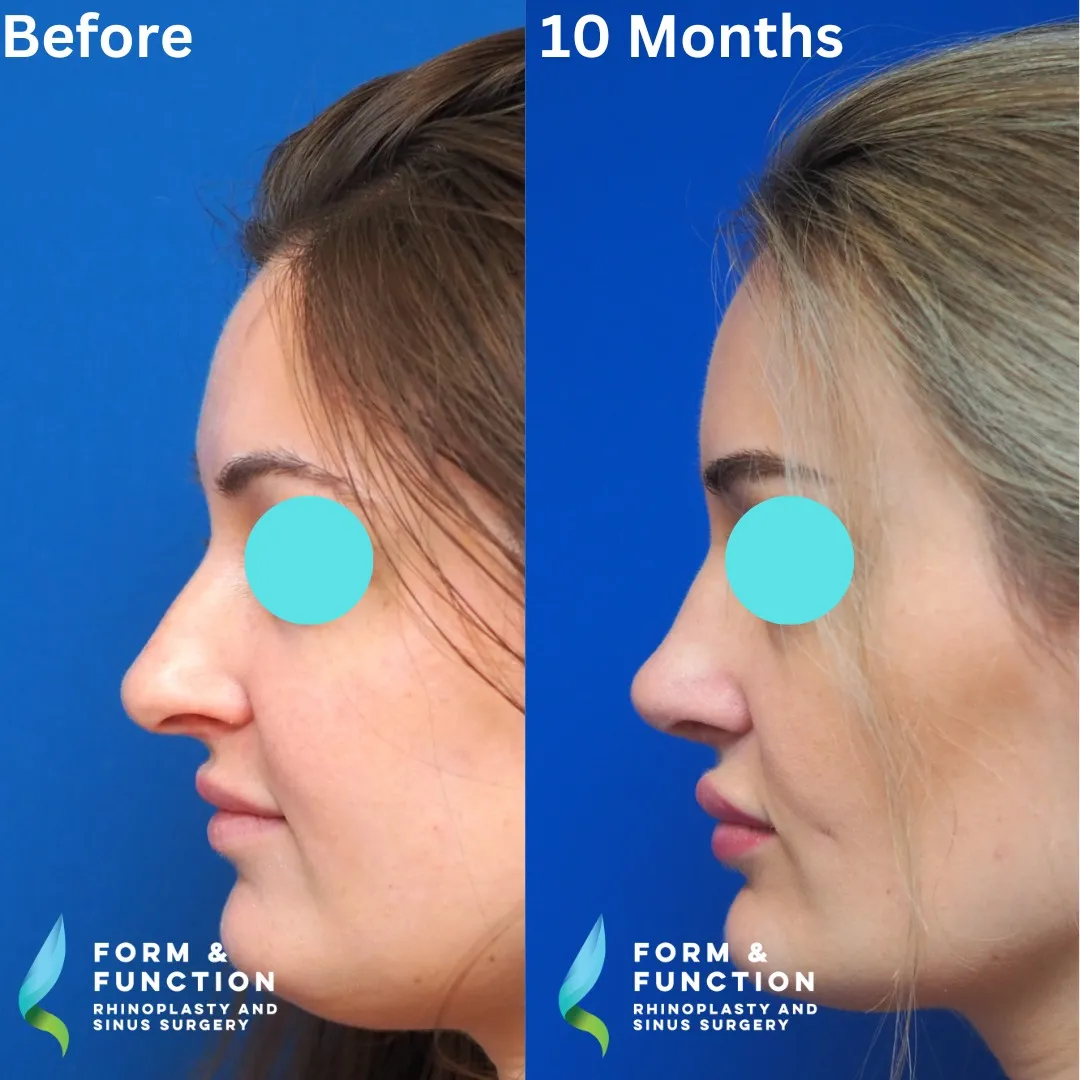
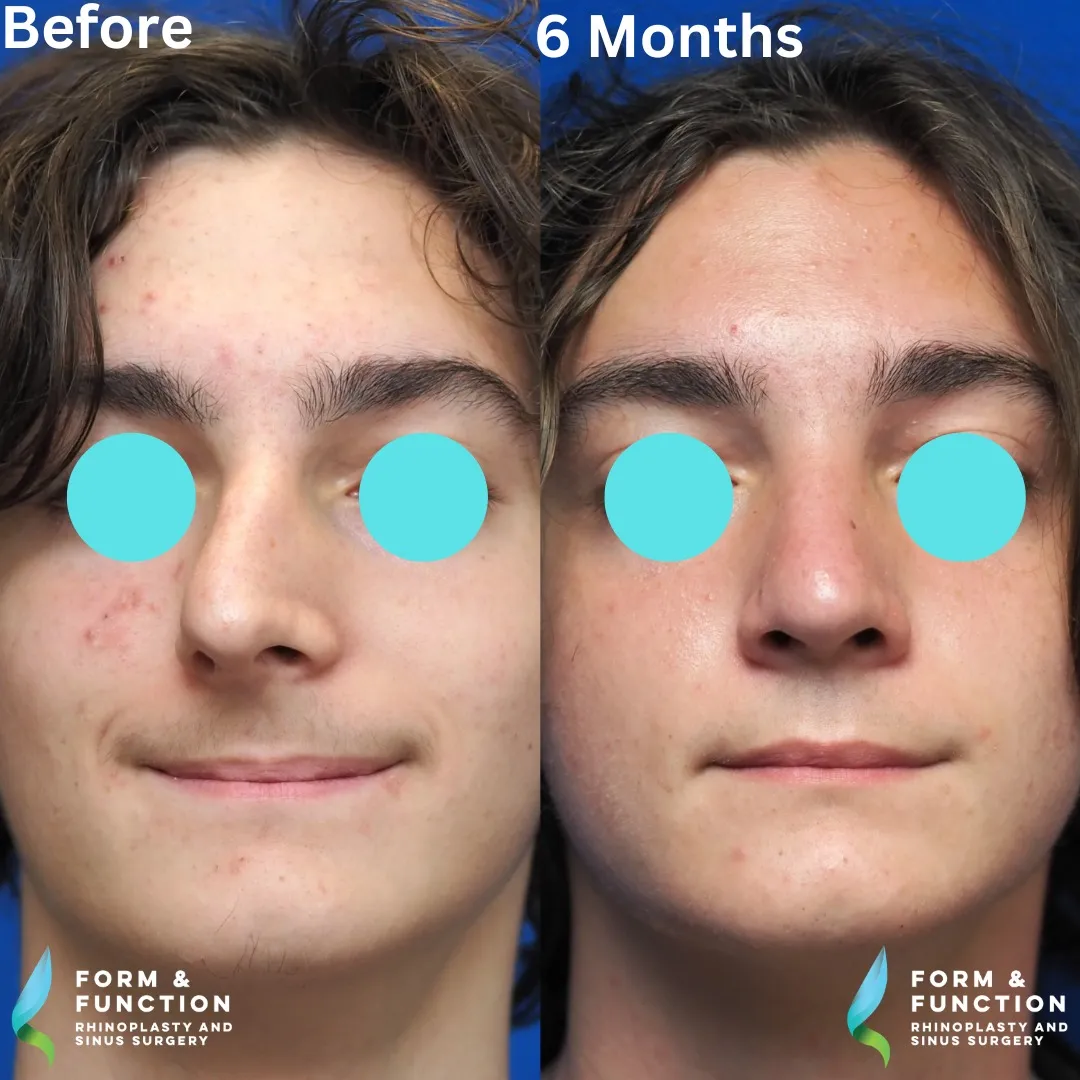
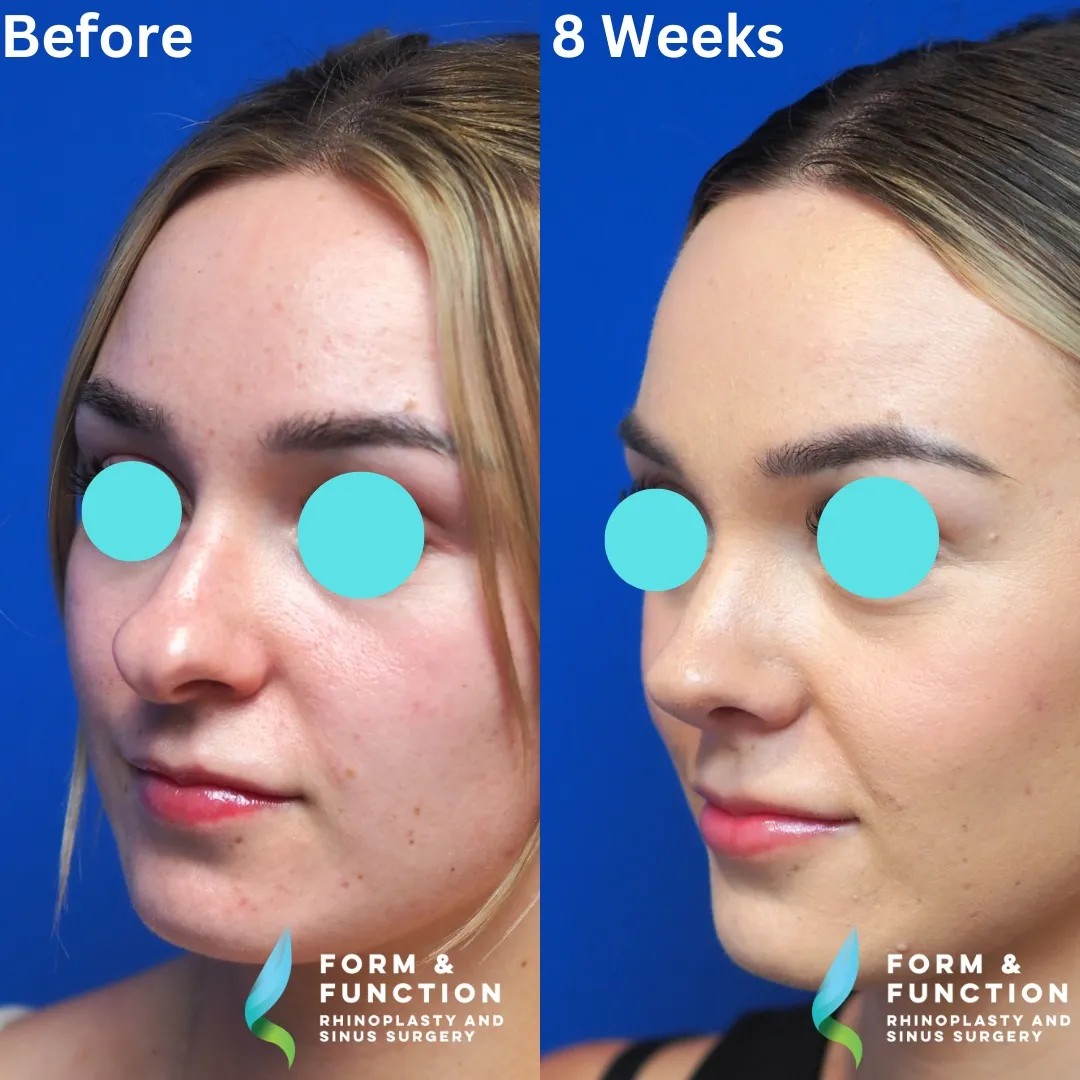
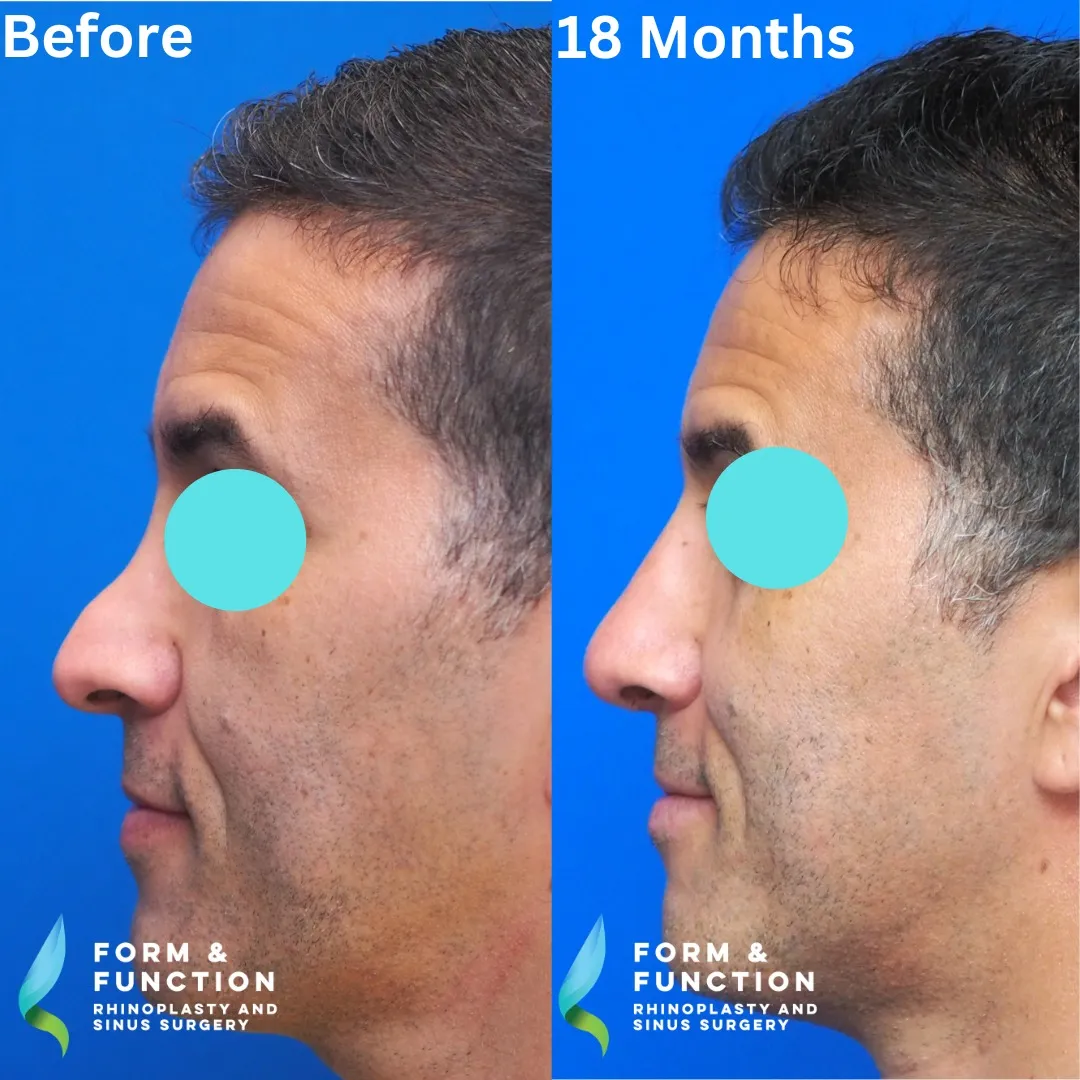
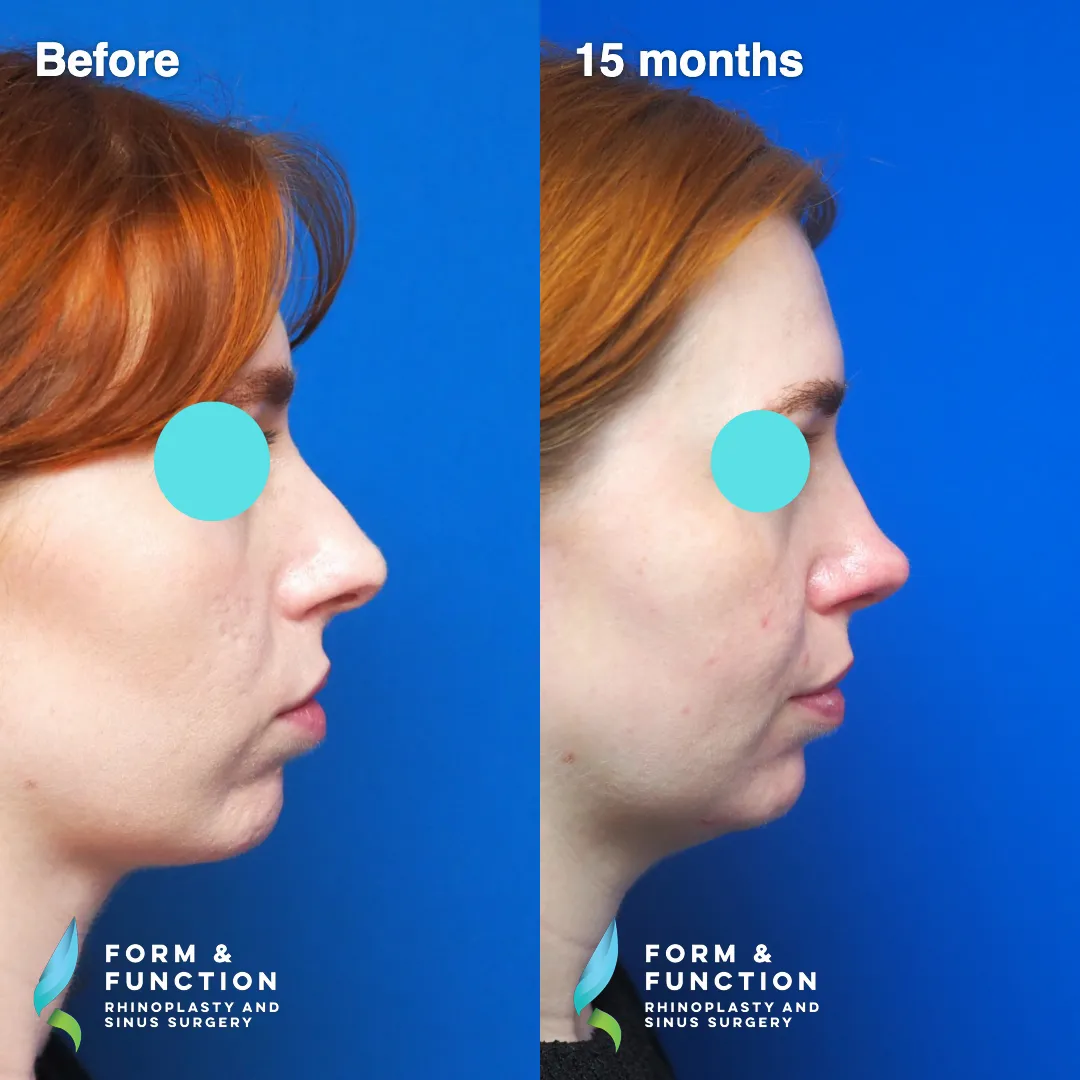
Swelling settles over the first six to eight weeks, but the nose continues to refine for twelve months and longer, particularly at the tip. Patients with thicker skin take longer. This is why the photographs in the gallery state how long after surgery each was taken.
Rhinoplasty carries risk whatever instruments are used. Bleeding, infection, changes to breathing, residual irregularity that may need revision surgery, and the possibility that the result is not what you hoped for all apply.
The full discussion of risks and expected recovery is set out on our risks page and forms part of every consultation.
Before and after photographs of my patients are in the gallery, with the time since surgery stated for each. Results vary between patients and no surgical outcome can be guaranteed.
I see patients from across Queensland and interstate. The first consultation can be done by video, with the second in person before surgery. Travel needs some planning, particularly around the cooling off period and the time before you can fly home, and we will set that out for you when you enquire.
The following galleries contain adult content and are not suitable for viewers under the age of 18
Rhinoplasty surgery is surgery that changes the external shape of the nose.
Rhinoplasty surgery can address breathing difficulties (known as functional rhinoplasty) or alter the appearance of the nose (cosmetic rhinoplasty) or both.
Dr Oosthuizen’s practice is focused on all aspects of nose surgery, and he performs both functional and cosmetic rhinoplasty procedures as well as revision rhinoplasty.
During rhinoplasty:
When planning rhinoplasty, Dr Chris Oosthuizen looks at the whole picture and will consider your other facial features, the skin on your nose and what you would like to change.
Frequently the internal wall (nasal septum) that separates the nose cavities is twisted. This may need to be corrected at the same time (Septoplasty). The combined operation is called a septorhinoplasty.
There are limits to how much a nose can be altered. The final result will depend on the size of your nose, the condition of your skin, your age and how well it heals after surgery.
There are several different types of rhinoplasty surgery, however in the majority of rhinoplasty surgeries performed by Dr Oosthuizen, the surgery usually involves a combination of both cosmetic and functional rhinoplasty.
The aim is that a cosmetic rhinoplasty does not come at the cost of breathing, and equally that a functional rhinoplasty improves the shape of the nose at the same time.
Cosmetic rhinoplasty:
The aim during cosmetic rhinoplasty is to change or refine the shape of the nose.
Functional Rhinoplasty:
Augmentation Rhinoplasty:
Reduction Rhinoplasty:
Revision rhinoplasty:
The duration of surgery is linked to the extent and complexity of the surgery. It can vary from just over an hour for minor refinements to over 3 hours for more complex, revision rhinoplasty procedures.
Depending on the extent of surgery the recovery will vary between one to two weeks. For limited surgery patients can be back at work as soon as a week after. For more complex, complete rhinoplasty surgery it is recommended to take two weeks off work after surgery to recover fully. Swelling will likely reduce to be unnoticeable after around 2 to 3 months. There will however be ongoing changes in the appearance of the nose for a year to 18 months following surgery.
During those recovery months, there are things patients might be best to avoid, such as playing contact sports or sunbathing, as the skin and nose structure are more sensitive.
Yes. Quite often the main aim of rhinoplasty is to improve breathing and nasal function. This is called functional rhinoplasty. As a specialist nose surgeon Dr Oosthuizen’s aim is to improve the functional and breathing outcome for his patients regardless of the type of rhinoplasty.
Rhinoplasty surgery is performed under a full General Anaesthetic.
It is recommended that you do not wear glasses including sunglasses for six weeks after rhinoplasty. This is to limit pressure on the bridge of your nose which can interfere with the final result of your operation. There are a number of solutions available including cheek pads that lift the glasses off your nose to ensure that there is no pressure placed over the bridge.
The cost of rhinoplasty surgery is different for each individual, reflecting the complexity of the surgery required.
Costs will include specific fees for Dr Chris Oosthuizen, the anaesthetist and the hospital.
If surgery is elected for aesthetic reasons only, health insurance will not cover these costs. Medically necessary surgery though may be covered in part.
Our fees are set with reference to the guidance published by the Australian Medical Association.
You will be given a written quote setting out the surgeon’s, anaesthetist’s and hospital fees, with expected rebates and out of pocket costs, before you decide whether to proceed.
Please contact our office if you have an enquiry regarding fees.
Yes. Rhinoplasty is one of the more technically demanding operations in facial surgery, and every patient accepts a degree of surgical risk. Understanding that risk properly is part of deciding whether to proceed.
It helps to separate two different things: the effects that are part of normal healing and happen to almost everyone, and the complications that are uncommon but can occur.
These are not complications. They are the expected course after surgery.
Swelling and bruising. Swelling around the nose and eyes is greatest in the first few days. Most visible swelling settles over the first six to eight weeks, but residual swelling continues to resolve for twelve months or longer, particularly at the tip. Patients with thicker skin take longer. This is why the photographs in our gallery state how long after surgery each was taken, and why a nose at six weeks does not look like the same nose at twelve months.
Nasal congestion. Internal swelling makes breathing through the nose difficult for the first one to two weeks. This is temporary and does not indicate that the surgery has failed.
Numbness. Reduced sensation in the nasal skin and tip is common and usually settles over several months.
Discomfort. Most patients describe the pain as moderate and manageable with simple analgesia. Pain that worsens after the first week should be reported rather than tolerated.
Bleeding. Minor bleeding in the first days is common. Significant bleeding is uncommon but occasionally requires treatment.
Infection. Uncommon after rhinoplasty. Where it occurs it is usually treated with antibiotics, and rarely requires further surgery.
Residual irregularity or asymmetry. This is the most common reason patients are dissatisfied. The nose is a three-dimensional structure and small changes in one area affect others in ways that are not entirely predictable. Revision surgery is required in up to 10 per cent of cosmetic rhinoplasty cases.
Breathing changes. Rhinoplasty alters the internal structure of the nose as well as its appearance. Breathing can be improved, but it can also be made worse, particularly where the nasal valve is narrowed. This is one reason functional assessment is part of every consultation rather than an optional extra.
Changes to smell. A temporary reduction in the sense of smell is common while the nose is congested. Persistent change is rare.
Septal perforation. A hole in the septum, which can cause whistling, crusting or bleeding. Uncommon, and more likely where septal surgery has been performed previously.
Scarring. In open rhinoplasty there is a small scar across the columella, between the nostrils. In most patients this fades to become difficult to see. Poor scarring is uncommon but possible.
Anaesthetic risk. Modern general anaesthesia is very safe. Serious complications are rare, and your anaesthetist will discuss your individual risk before surgery.
This is worth stating plainly, because it is not the same as a complication. Surgery can go technically well and still not produce the outcome you imagined. The final shape of the nose depends on your skin thickness, your underlying anatomy and how you heal, none of which are fully controllable. This is why we discuss what is realistically achievable before surgery, and why Dr Oosthuizen will decline to operate where he does not believe surgery can deliver a worthwhile improvement.
Choosing a surgeon with specialist qualifications and experience in nasal surgery specifically. Being honest about your medical history, medications and smoking. Following post-operative instructions, particularly around avoiding trauma to the nose. Attending your follow-up appointments, so that anything developing is identified early.
Contact us rather than waiting if you develop worsening pain after the first week, fever, bleeding that does not settle, increasing redness or swelling of the nasal skin, or any sudden change in vision. These are uncommon, but they need to be assessed rather than monitored at home.
Some facial cosmetic procedures are temporary and require touch ups every so often. Surgical rhinoplasty changes the structure of the nose, so the change is permanent rather than temporary. It is however important to realise that rhinoplasty surgery cannot stop the nose from aging naturally.
Rhinoplasty surgery is a complex and technically challenging procedure that can alter both the appearance and function of the nose. It is essential to have realistic expectations of what can be achieved with rhinoplasty surgery. During the pre-surgery consultation process the extent of the procedure, risks, anticipated recovery as well as limitation of surgery will be discussed at length.
Ultimately however there are some limitations to what can be achieved with rhinoplasty surgery.
Some of these factors include:
Yes, Rhinoplasty is often combined with:
There will be some pain and discomfort following surgery, however most patients rate their pain between a 0 – 4 out of ten the day after surgery. You will be given pain medication, including anti-inflammatory medication, to take after going home.
That is the aim. Dr Oosthuizen plans the operation around your other facial proportions and features, so that the nose fits the rest of the face rather than drawing attention to itself. How closely that is achieved depends on your underlying anatomy, your skin thickness and how you heal.
After rhinoplasty it is advisable to sleep with you head in an elevated position. This will help to minimse swelling during the recovery period. Ideally your head should be raised on 2-3 pillows for the first two weeks after surgery and avoid sleeping on your stomach during this time.
Rhinoplasty surgery is widely considered to be one of the most technically challenging procedures to perform. Selecting the right surgeon is therefore of the utmost importance. Some of the things to look out for include:
“Nose job” is a broad term that is commonly used in everyday language to refer to surgery on the nose. The two main surgeries often referred to as a “nose job” includes septoplasty, which focusses on straightening the internal partition between the nostrils, and rhinoplasty which aims to change the external appearance of the nose.
Septoplasty surgery does not alter the external shape or appearance of the nose and is most commonly performed to improve the function of the nose. Septoplasty and Rhinoplasty surgery are often combined in one surgery which is called a Septorhinoplasty.
After rhinoplasty surgery it is best to avoid the following:
Exercise and strenuous activities:
You will be encouraged to take walks and stay active after your surgery however it is important to avoid strenuous activity for 3 weeks after surgery. This includes running, aerobic exercise, heavy lifting, cycling – anything that gets your heart rate up significantly. During the third week it is possible to gradual ease back into your training regime. Swimming should be avoided for 6 weeks after rhinoplasty and ideally contact sports should be avoided as far as possible.
Nose blowing:
It is natural to want to blow your nose after rhinoplasty surgery as it will feel congested. It is vital however not to do so especially for the first two weeks after surgery. You will be encouraged to use the nasal wash provided instead of blowing your nose to relieve the congestion and to help dissolve the soft packing that is used during surgery. Avoid crowed areas, people that are unwell with a cold or flu and wash your hands regularly to try and avoid getting sick during the first few weeks of recovery.
Getting the splint wet:
After surgery a splint is applied to the outside of the nose. This helps limit the amount of swelling and helps to keep everything in position. If the splint gets wet, it will come off too early which can in turn affect your final result.
Wearing glasses:
It is recommended that you do not wear glasses including sunglasses for six weeks after rhinoplasty. This is to limit pressure on the bridge of your nose which can interfere with the result of your operation. There are several solutions available including cheek pads that lift the glasses off your nose to ensure that there is no pressure placed over the bridge.
Sun exposure:
Avoid sun exposure for the first 6 months after rhinoplasty surgery. The skin can be quite sensitive and excessive sun exposure, can increase the risk of complications. Use a high index (50+) sunscreen and wide brim hat to keep your new nose cool.
Smoking and alcohol:
Smoking reduces blood flow interferes with wound healing. If you are a smoker, it is best to consider deferring surgery until you have been able to stop smoking. Drinking alcohol can interfere with other prescribed medications following the procedure and excessive amounts can impair you balance and may put your new nose at risk. It is best to avoid both for the first 3 weeks after surgery.
Touching your nose:
Following surgery, the nose can be quite itchy and there are often areas of scabbing and crusting along the incision sites, both inside the nose and on the outside between the nostrils where the sutures are. The natural tendency is to try and clear this away to alleviate the irritation.
The hands and fingers are, however, full of bacteria that live on your skin. It is quite possible to transfer these into the wound which can lead to a wound infection. Even though infection is relatively uncommon after rhinoplasty surgery it can affect the end results when it does occur and is best avoided.
Rhinoplasty aims to change the shape and the external appearance of the nose, while septoplasty surgery does not alter the external shape or appearance of the nose and is most commonly performed to improve the function of the nose.
Septoplasty and Rhinoplasty surgery are often combined in one surgery which is called a Septorhinoplasty.